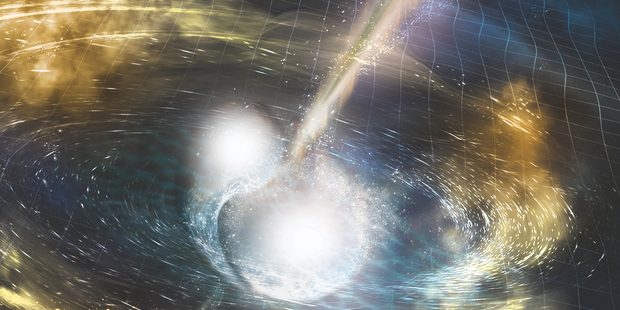
Between April 2023 and November 2025, the fourth LIGO-Virgo-KAGRA observing run (O4) delivered an unprecedented stream of gravitational-wave alerts to the astronomical community. There were a total of 5,466 candidate alerts that were released – an order-of-magnitude increase compared to previous observing runs.
GOTO listened to the alert stream using the full telescope network of GOTO-North and GOTO-South. Of those 5,466 GW alerts, the GOTO network directly targeted 162 events which passed our real-time selection strategy thresholds.
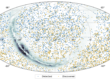
In addition to directly targeting alerts, we performed an archival cross-matching search for all images that overlap the 5,466 GW alerts. Through this cross-matching, we found an additional 5,303 events that were covered serendipitously by GOTO’s all-sky survey. We also find serendipitous coverage of 82 of the 86 events in the GWTC-4.0 catalogue [1].
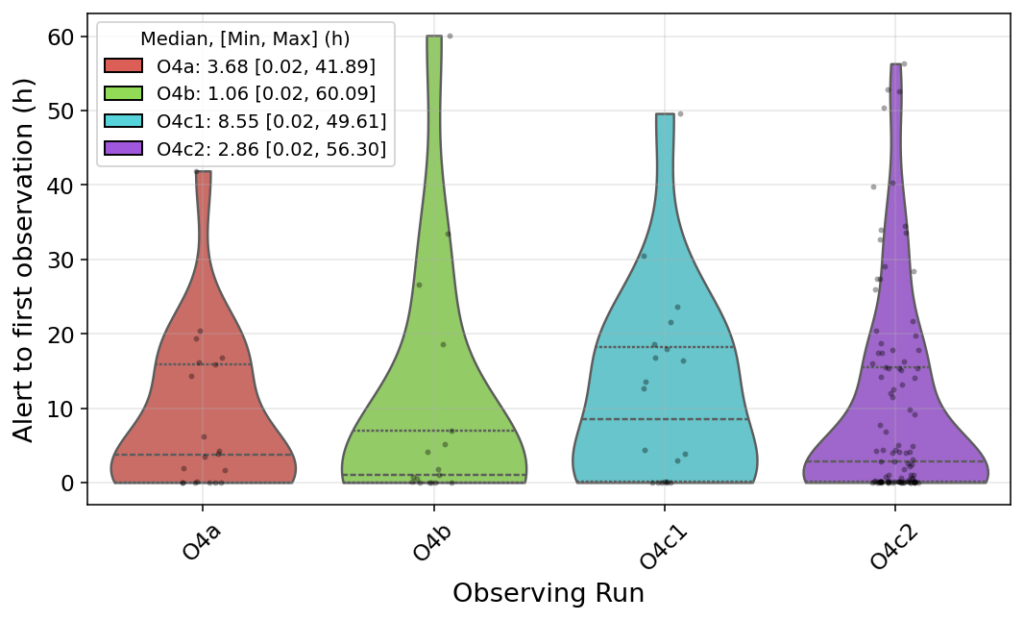
The first observations were taken within a few minutes to hours of the GW trigger time, where we find a median delay from receiving the GW alert to first observation of just under 3 hours.
Why two hemispheres matter
The advantage of the dual-node, dual-hemisphere network is that it can chase events that drop below the horizon of any single observatory. The example below shows the tiling of S251112cm, a candidate with a 95% credible region spanning both hemispheres.
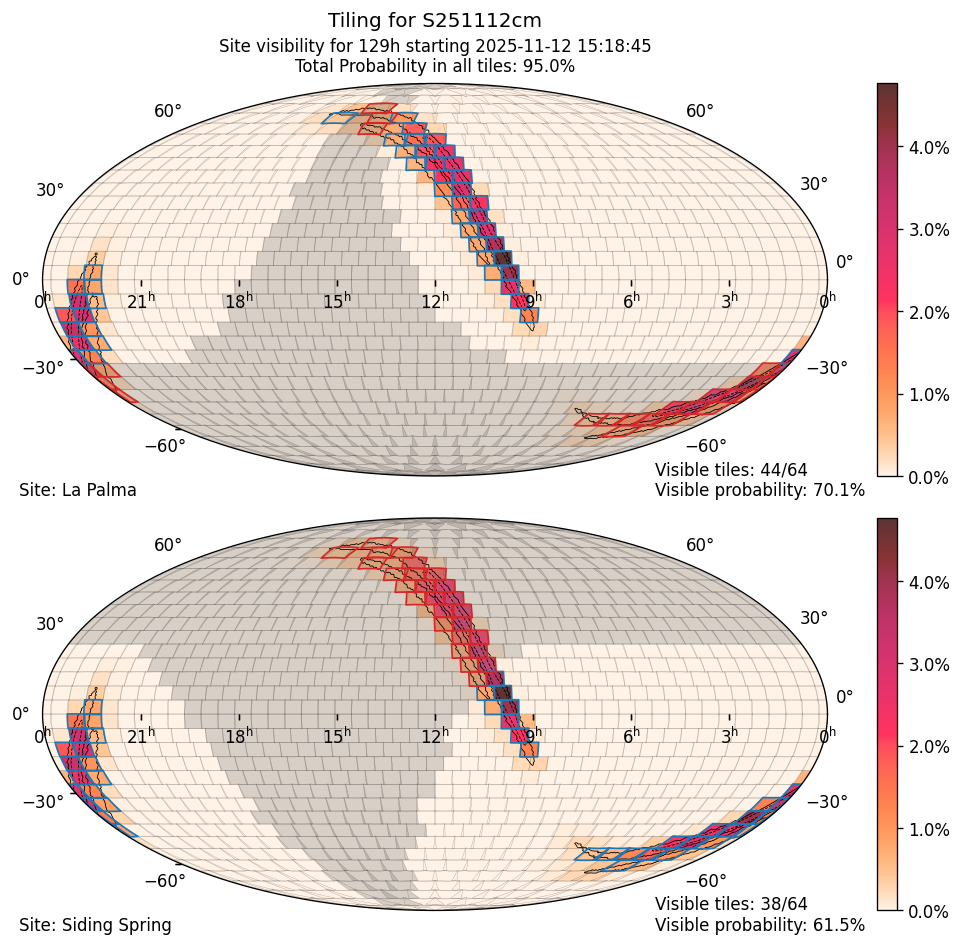
From La Palma alone, GOTO could reach only 70.1% of the localisation probability. From Siding Spring alone, only 61.5%. Operating both sites together, GOTO could cover 95.0% of the skymap and essentially cover the entire localisation in a single night. This configuration is what makes all-sky GW follow-up at high alert rates possible.
In searching for an electromagnetic counterpart, we processed nearly one million difference-image detections through the GOTO software processing stage. With automated vetting of these sources, we were left with nearly 1,800 candidates that were promoted for collaboration members to review. Finding a plausible electromagnetic counterpart to a GW source is challenging, and given that the GW alerts were dominated by terrestrial and binary black-hole classifications, the challenge is still ever present.
A forthcoming paper (Ackley, et al., in prep.) will present the full performance of the network across the campaign.
[1] (https://iopscience.iop.org/article/10.3847/2041-8213/ae0c06)[GWTC-4.0] GWTC-4.0: An Introduction to Version 4.0 of the Gravitational-Wave Transient Catalog, Abac et al.